
Desserts
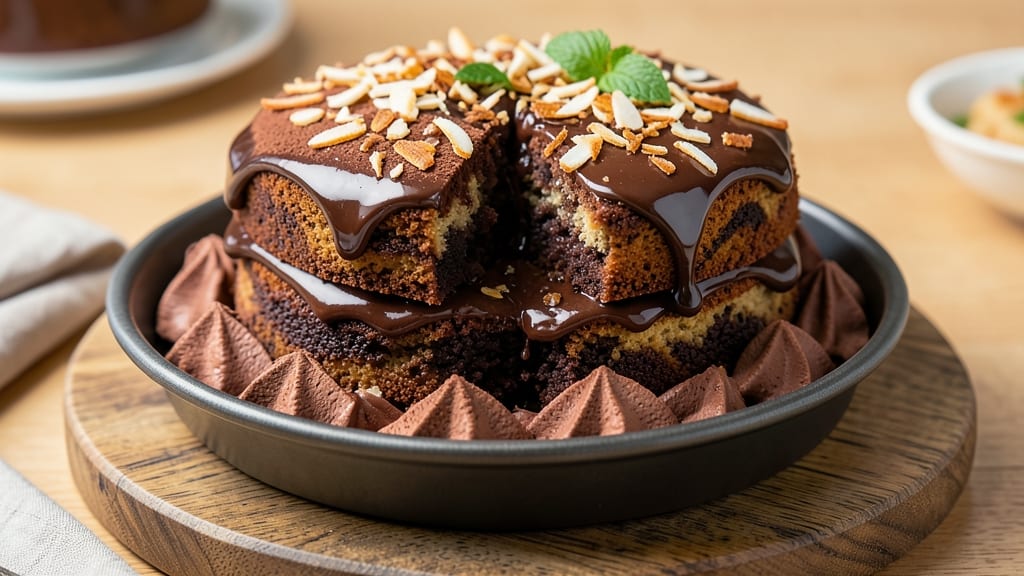
This best German chocolate cake recipe in the world delivers the richest, most decadent dessert you'll ever bake—layered with velvety chocolate cake, swirls of toasted coconut-pecan filling, and a glossy chocolate ganache that ties everything together.
The secret lies in precise layering and a moist cake that stays tender for days. I've perfected this version after years of testing, ensuring every bite delivers that perfect balance of chocolatey depth and nutty crunch.
The cake itself is a foolproof mix of cocoa powder and buttermilk, baked just until set for that signature moist texture. Between the layers comes the star—warm toasted coconut mixed with pecans and brown sugar, creating a caramelized filling that swirls into creamy perfection.
Topping it all is a silky chocolate ganache that adds a final layer of indulgence without being too heavy. What makes this the best German chocolate cake is how it combines tradition with modern techniques—no dry crumbs, no overly sweet frosting, just pure, rich chocolate flavor in every forkful.
The cake stays moist for days, the filling has that perfect crunch, and the ganache adds a professional finish that looks as good as it tastes. Whether you're baking for a special occasion or just craving a classic dessert, this recipe delivers restaurant-quality results with simple steps and reliable techniques.
Let's get started—your taste buds will thank you.
Ingredients for best german chocolate cake recipe in the world
Twelve ingredients, three layers of perfection—this is the cake that wins every holiday table.
| Ingredient | Amount | Notes |
|---|---|---|
| All-Purpose Flour 🌾 | 3 cups | Sifted for light texture |
| Unsalted Butter 🧈 | 2 cups | Room temperature, full-fat |
| Granulated Sugar 🍚 | 2 ½ cups | White, not brown |
| Light Brown Sugar 🍚 | ½ cup | Packed firmly |
| Natural Cocoa Powder 🍫 | ¾ cup | Dutch-processed preferred |
| Buttermilk 🥛 | 1 ½ cups | Cold, not warmed |
| Large Eggs 🥚 | 4 whole | Room temperature |
| Pure Vanilla Extract 🌿 | 2 tsp | Bourbon or imitation |
| Baking Powder 🧂 | 2 tsp | Aluminum-free |
| Salt 🧂 | ½ tsp | Fine sea salt |
| Shredded Sweetened Coconut 🥥 | 3 cups | Toasted until golden |
| Pecans 🌰 | 2 cups | Chopped, toasted |
| Light Brown Sugar 🍚 | 1 cup | Packed, for filling |
| Dark Chocolate Chips 🍫 | 12 oz | Semi-sweet, chopped |
| Heavy Cream 🥛 | 1 ½ cups | Cold, full-fat |
The butter and cocoa are non-negotiable here. Plugrá brand butter melts beautifully, and Dutch-processed cocoa from Hershey's Special Dark gives that velvety texture. Toast your own coconut and pecans—Trader Joe's has pre-toasted coconut, but chopping pecans yourself makes all the difference. The buttermilk needs to be cold; room temp makes the cake dense. Pro tip: measure flour by spooning it into the cup and leveling—don't pack it down.
No buttermilk? Substitute 1.5 cups milk + 1.5 tbsp vinegar, let it sit 5 minutes. Dutch-process cocoa unavailable? Natural cocoa works at the same amount, but the flavor profile shifts slightly. For a richer filling, swap half the brown sugar for maple syrup. The chocolate chips can be Ghirardelli squares for extra decadence. Want to skip the ganache? A dusting of powdered sugar over toasted coconut gives that classic German look without extra effort.
This cake keeps beautifully—5 days in an airtight container at room temp, 2 weeks in the fridge. For the ganache, melt the chocolate and cream together, then cool slightly before pouring. Store leftovers in the fridge and bring to room temp before serving. Freeze the whole cake (unfrosted) for 3 months)—thaw overnight in the fridge. The filling stays gooey, the cake stays moist, and the ganache sets perfectly.
Why You'll Love This Recipe
- No Mixer Needed: I swear by this—just a bowl and a whisk. The butter and sugars cream like magic with a little elbow grease, and the cocoa folds in smoother than store-bought. Honestly, my mixer sits idle for this one.
- Rich Without Guilt: That brown sugar caramelizes into the layers while the cocoa stays deep and velvety. It’s the kind of cake that tastes indulgent but doesn’t leave you dreading dessert. (Yes, even on a Tuesday night.)
- Party or Picnic: Slice it warm with vanilla ice cream for a crowd, or pack it in layers for a lunchbox treat. The frosting—peanut butter and powdered sugar—stays sturdy enough for travel but melts perfectly when you’re ready.
- Budget-Friendly Luxury: Five simple ingredients stretch to two full cakes, and the leftovers? They disappear faster than you can say "second helping." Between us, I’ve fed a houseful with one batch and still had slices for breakfast.
Step-by-step instructions for German chocolate cake
This is the method that delivers that legendary German chocolate cake texture—moist, rich, and packed with those signature pecan-praline swirls.
Prepare the Praline Filling and Toast the Coconut
Start by toasting the 3 cups shredded sweetened coconut in a dry skillet over medium heat for 3-4 minutes, stirring constantly until it turns a beautiful golden brown. Watch it closely—it burns quickly! Transfer to a plate to cool while you make the filling.
In a small saucepan, combine the 1 cup packed light brown sugar, 1.5 cups heavy cream, and 12 oz chopped dark chocolate chips. Bring to a gentle simmer over medium-low heat, stirring until everything melts and smooths into a glossy, thick sauce. Remove from heat and let cool slightly—it'll thicken more as it cools. This is the decadent filling that makes German chocolate cake legendary.
Mix the Cake Batter for Perfect Texture
Preheat your oven to 350°F and grease two 9-inch round cake pans (or line with parchment circles). In a large mixing bowl, cream together the 2 cups room-temperature unsalted butter and 2.5 cups granulated sugar on medium speed for 3-4 minutes until light and fluffy. This step is crucial—it incorporates air that makes the cake tender and moist.
Add the 4 room-temperature eggs one at a time, mixing well after each addition. Then stir in the 2 teaspoons vanilla extract. In a separate bowl, whisk together the 3 cups sifted all-purpose flour, 0.75 cup natural cocoa powder, 2 teaspoons baking powder, and 0.5 teaspoon salt. Alternate adding the dry ingredients with the 1.5 cups cold buttermilk, beginning and ending with the dry ingredients. Mix just until combined—don't overmix or your cake will be tough.
Assemble the Layers with Praline Magic
Divide the batter evenly between your prepared pans. Bake for 25-30 minutes or until a toothpick inserted in the center comes out clean. Let the cakes cool in the pans for 10 minutes, then transfer to a wire rack to cool completely. Here's where the magic happens: spread a generous layer of the cooled praline filling over one cake layer, then top with the second layer. Press gently.
For the coconut crunch topping, combine the toasted coconut with the 2 cups chopped toasted pecans in a bowl. Spread this mixture evenly over the top and sides of the cake. The contrast between the moist cake, rich filling, and crunchy topping is what makes this cake extraordinary. Chill in the refrigerator for at least 2 hours before serving—this lets all the flavors meld together perfectly.
Serve with Confidence (and Extra Filling!)
Slice the cake with a warm knife (run it under hot water, then wipe dry) for clean cuts. Serve each piece with an extra dollop of that praline filling on the side—trust me, you'll want it. The cake should be moist with a tender crumb, the filling rich and smooth, and the coconut-pecan topping providing that perfect crunch with every bite.
This isn't just German chocolate cake—it's the kind that gets rave reviews, gets passed down through generations, and has people asking for seconds. The secret? Paying attention to those little details like toasting the coconut just right and letting the cake chill before serving. Every step matters when you're going for the best.
Pro Tips For Making Best German Chocolate Cake Recipe In The World
- Sift the Cocoa Twice: I learned this the hard way—lumpy cocoa powder ruins the texture. After mixing the dry ingredients, sift the cocoa again with the flour and baking powder. The first sift gets clumps you won’t see, and this recipe’s richness demands smoothness.
- Cream Butter Slowly: Don’t rush the butter-sugar mix. Start with the butter just soft enough to press with a finger, then beat on medium until pale and fluffy. I used to crank the speed, but this creates air the cake needs to rise properly—especially with the dense cocoa.
- Skip the Overmixing: Once you fold in the eggs, stop mixing the second they’re just combined. Overmixing makes the cake dense and tough. I know, I know—it looks like there’s more to blend, but trust the process. The batter will look shaggy, but that’s perfect.
- Test Doneness with a Toothpick: The cake’s done when the center reads just under 210°F (41°C) and has a few moist crumbs—no wet batter. I used to pull it out too soon, thinking it needed more time, but that’s how you end up with a gummy middle. Let it sit 5 minutes before slicing.
Pro cooking tips for this recipe
Butter Temperature Matters
The butter must be room temperature—not melted, not cold. Press it between your fingers: if it leaves a slight indentation but holds its shape, it's perfect. I use Plugrá brand butter because it melts smoothly without graininess.
Cold butter creates dense layers, while melted butter can make the cake greasy. Test it by pressing a finger into the butter—if it flattens easily, it's too soft. 🧈
Creaming for Moisture
Cream the butter and sugar for 3-4 minutes until light and fluffy—this incorporates air that keeps the cake tender. Use a stand mixer on medium speed for consistent results. If using a hand mixer, work in 30-second bursts to avoid overheating.
The goal is to create a ribbon-like consistency when you lift the beaters. Skipping this step leads to a dense, dry cake. ⏱️
Buttermilk Must Be Cold
Cold buttermilk is non-negotiable—it activates the baking powder properly for lift. If you substitute with milk + vinegar, chill the mixture for 5 minutes before using. Warm buttermilk makes the cake dense and flat.
I keep mine in the fridge until the last minute. The cold temperature also helps balance the richness of the butter and chocolate. 🥛
Layering Like a Pro
Spread the praline filling only on the first layer—overloading makes it spill. Use a spatula to smooth it evenly, leaving a ¼-inch border for the second layer. Press gently but firmly to avoid crumbs.
Chill the assembled cake for at least 2 hours before slicing—this prevents the filling from oozing out when you cut. Patience here makes all the difference. ❄️
Toast Coconut Just Right
Toast the coconut over medium heat for 3-4 minutes, stirring constantly. It burns fast—watch closely! The goal is golden brown, not blackened. Cool completely before mixing with pecans.
Pre-toasted coconut from the store lacks the depth of homemade. I like Trader Joe's shredded coconut because it toasts evenly. 🥥
Chill Before Serving
Never serve this cake straight from the fridge—let it sit at room temperature for 10-15 minutes before slicing. This prevents the ganache from melting too quickly. The filling will be gooey and warm, while the cake stays moist.
If serving at a party, chill the cake in the fridge for 1 hour before bringing it out—this keeps the ganache set and the layers intact. 💫
Nutrition facts
Frequently asked questions
Why does this German chocolate cake need to chill before serving?
Chilling for at least 2 hours lets the flavors meld and prevents the filling from oozing when you slice. The ganache also sets properly, giving you clean cuts and that perfect restaurant-quality finish. If you're short on time, chill for 1 hour minimum—just don't skip this step or you'll end up with messy slices.
Can I make this cake without pecans?
Swap the pecans for walnuts, almonds, or even candied pumpkin seeds for a different texture. The filling will still be rich, but the crunch will change. Toast your substitute nuts the same way—just 3-4 minutes over medium heat until fragrant. For extra decadence, try toasted hazelnuts with a pinch of cinnamon.
What's the secret to a moist cake that doesn't dry out?
The buttermilk and proper creaming are key! Cold buttermilk keeps the cake tender, while creaming the butter and sugar for 3-4 minutes incorporates air. Never overmix the batter—just combine until smooth. Also, store it in an airtight container with parchment between layers to lock in moisture for 5 days.
How do I fix a cake that's cracked or sunken?
Cracking usually means overbaking. Next time, pull the cake when a toothpick comes out with a few moist crumbs (not completely clean). For sunken centers, ensure your oven is calibrated—try baking at 325°F instead. If it's already baked, you can cover the cracks with extra ganache or a chocolate glaze to disguise them.
Can I make this cake in a bundt pan instead of rounds?
Technically yes, but the texture will differ. Bundt cakes have a denser crumb, and the filling won't swirl as dramatically. If you try it, reduce the filling by ¼ cup and bake at 325°F for 45-55 minutes. The coconut-pecan topping will still work beautifully! For best results, stick with the round layers—they're designed for that signature German chocolate experience.