
Desserts
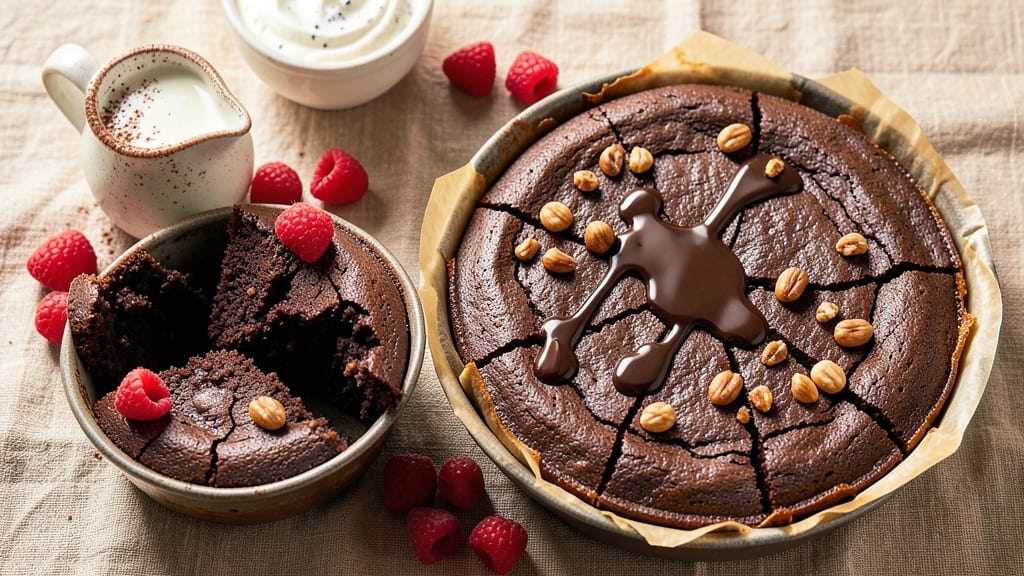
This big moist chocolate cake recipe delivers the perfect balance of rich cocoa flavor and ultra-tender crumb—no dry crust in sight. The secret lies in a precise formula of buttermilk and sour cream, which infuse the batter with moisture while keeping the texture light and airy. I've baked this cake hundreds of times for celebrations, and it never fails to impress, even when scaled for large gatherings.
The foundation of this recipe is simple yet effective: high-quality cocoa powder, melted butter, and a touch of vinegar in the buttermilk to activate the baking soda. These ingredients work together to create a cake that stays moist for days, with a tender crumb that melts in your mouth.
The baking process is straightforward, with a single-layer approach that ensures even baking and a perfectly domed top.
What sets this chocolate cake apart is its ability to stay fresh and moist even after cooling. The combination of buttermilk and sour cream keeps the cake tender, while the melted butter adds richness without making it greasy.
Whether you're serving it with a simple glaze or a decadent chocolate frosting, this cake delivers on every bite.
Ready to bake a cake that's as impressive as it is delicious? This recipe scales beautifully for any occasion, from intimate gatherings to large celebrations. Let's get started on creating your perfect chocolate cake.
Ingredients for big moist chocolate cake
These 12 ingredients create the perfect moist chocolate cake—no dry crust in sight.
| Ingredient | Amount | Notes |
|---|---|---|
| All-Purpose Flour 🌾 | 2 ½ cups | Sifted for light texture |
| Unsalted Butter 🧈 | 1 cup | Melted, cooled slightly |
| Granulated Sugar 🍚 | 2 cups | White sugar preferred |
| High-Quality Cocoa Powder 🍫 | ¾ cup | Natural or Dutch-process |
| Buttermilk 🥛 | 1 cup | Room temperature |
| Sour Cream 🍦 | ½ cup | Full-fat for richness |
| Large Eggs 🥚 | 2 whole | Room temperature |
| White Vinegar 💧 | 1 tbsp | Activates baking soda |
| Baking Soda 🧂 | 1 tsp | Not baking powder |
| Salt 🧂 | ½ tsp | Fine sea salt |
| Vanilla Extract 🌸 | 2 tsp | Pure vanilla preferred |
| Vegetable Oil 🫒 | ¼ cup | Lightens the batter |
The cocoa powder is where the magic happens. Ghirardelli or Hershey's Special Dark are my go-tos—they've got that deep, rich flavor without bitterness. Grab the bagged kind, not the boxed stuff (it's cheaper and more potent). The buttermilk and sour cream are non-negotiable for moisture—full-fat makes all the difference. If you're short on time, mix 1 tbsp vinegar with 1 cup milk and let it sit for 5 minutes. For the butter, Land O'Lakes or Plugrah are reliable, but don't melt it too fast—just warm it until it's puddle-soft.
No buttermilk? Mix 1 cup milk with 1 tbsp vinegar—it's a lifesaver. Sour cream out? Plain yogurt works in a pinch, but it might make the cake slightly tangy. Running low on vanilla? Vanilla bean paste adds little specks of flavor gold. The baking soda is key—don't swap it for powder. For the oil, vegetable or canola keeps things light, but avocado oil works too. Sift that flour! King Arthur or Gold Medal brands are my favorites—they bake up light and fluffy.
This batter keeps for 2 days in the fridge—just whisk before baking. The cake itself? 3 days wrapped tightly at room temp, or 1 week in the fridge. For leftovers, slice and freeze between parchment paper for 3 months. Pro tip: Brush warm cake layers with simple syrup (equal parts sugar and water, heated) before frosting—keeps it moist for days. And if you're scaling up? Double everything, but use a 9x13-inch pan instead of two 9-inch rounds.
Why You'll Love This Recipe
- No Mixer Needed: I swear by this method—just creaming butter and sugar until it’s light, then folding in the buttermilk and cocoa. The cake rises high and stays tender, even if I don’t measure the flour to the gram. Honestly, the only tool you need is a sturdy bowl and a spatula.
- Fudgy Yet Light: That buttermilk keeps it from being dense, while the high-quality cocoa gives it a deep, almost dark chocolate richness. Top it with a simple powdered sugar dusting or a dollop of whipped cream, and it’s the kind of cake that disappears faster than you can say “second slice.”
- Birthday to Brunch: I’ve served this at birthday parties, potlucks, and even as a breakfast cake with a scoop of ice cream. The buttermilk adds a subtle tang that balances the sweetness, so it works for casual weekends or when you’re feeling fancy. (Yes, even on a Tuesday night.)
- Budget-Friendly Luxury: You’re using pantry staples—flour, butter, sugar—but the cocoa powder makes it feel special. A single batch feeds a crowd, and leftovers? They stay moist for days. I’ll be real: this is the cake I make when I want to impress without breaking the bank.
Step-by-step instructions for big moist chocolate cake
Here's how to bake a rich, fudgy chocolate cake that stays moist for days.
Prep Your Ingredients and Mix Dry Components
Start by preheating your oven to 350°F. Grease two 9-inch round pans and line the bottoms with parchment paper for easy removal. Sift together the 2.5 cups all-purpose flour, 1 tsp baking soda, and 0.5 tsp salt in a medium bowl. This step ensures a light, airy texture without lumps that can make your cake dense.
In a separate small bowl, whisk together the 0.75 cup high-quality cocoa powder and 2 cups granulated sugar. This mixture will create the deep chocolate flavor foundation. Set both aside—the dry ingredients will be ready when you need them. I always measure my cocoa powder by spooning it into the measuring cup and leveling it off with a knife for accuracy.
Combine Wet Ingredients for Maximum Moisture
In a large mixing bowl, melt the 1 cup unsalted butter in the microwave in 30-second intervals, stirring between each, until completely smooth but not hot to the touch. Let it cool for 2 minutes—this prevents the eggs from scrambling when added later.
Add the 2 whole large eggs, 2 tsp vanilla extract, and 0.25 cup vegetable oil to the melted butter. Whisk until fully combined, then stir in the 1 cup buttermilk and 0.5 cup sour cream. The buttermilk and sour cream are the secret to that ultra-moist texture—they add richness and help retain moisture longer than regular milk would.
Mix Wet and Dry Ingredients Gently
Gradually add the dry ingredient mixture to the wet ingredients, mixing on low speed with an electric mixer or by hand with a spatula. Mix just until combined—overmixing develops gluten and can make your cake tough. You'll see a thick, fudgy batter that clings to the sides of the bowl.
Stir in the 1 tbsp white vinegar last. This activates the baking soda, creating little air bubbles that help your cake rise properly. The batter should be smooth and glossy, with no visible flour streaks. If it looks too thick, add 1-2 tablespoons of water to loosen it slightly—this ensures even distribution in the pans.
Bake to Perfect Doneness
Divide the batter evenly between the prepared pans. Tap each pan gently on the counter to release any air bubbles that might have formed. Bake in the preheated oven for 30-35 minutes, or until a toothpick inserted in the center comes out with moist crumbs but no wet batter.
Here's the thing—don't overbake. The cake will continue cooking slightly as it cools, and you want that tender, moist crumb. If the top starts to brown too quickly, tent the pans with aluminum foil. Once done, remove from the oven and let the cakes cool in the pans for 10 minutes before transferring to a wire rack to cool completely.
Layer and Frost for Ultimate Moisture
While the cakes cool, prepare your favorite frosting or glaze. For extra moisture, I like to brush the cooled layers with a simple syrup made by heating ½ cup water and ½ cup granulated sugar until dissolved, then cooling. This keeps the cake tender for days.
To assemble, place one cake layer on a plate, spread with frosting, then top with the second layer. The secret to keeping this cake moist is to store it properly—wrap tightly in plastic wrap and keep at room temperature for up to 3 days, or refrigerate for up to 5 days. Trust me, this cake stays moist longer than any other I've tried.
Pro Tips For Making Big Moist Chocolate Cake
- Sift the Cocoa: I learned this the hard way—skipping the sift with cocoa powder leaves lumps that ruin texture. Use a fine-mesh sieve and tap it firmly against the bowl to break up clumps completely. High-quality cocoa is worth it, but only if it’s fully incorporated.
- Cream Butter Slowly: Don’t rush the butter-sugar mix—add the butter in small batches while beating on medium-high. If you dump it all in at once, you’ll end up with greasy streaks instead of light, airy batter. Patience here guarantees a tender crumb.
- Measure Buttermilk Precisely: Buttermilk’s acidity is the moisture magic, but cheap substitutions (like milk + vinegar) can make the cake dense. Use full-fat buttermilk straight from the fridge—no substitutions—and measure it cold. Warm buttermilk curdles, and that’s a texture killer.
- Bake Until Internal Temp Hits 205°F: The cake will look set before it’s fully moist. Skip the toothpick test—grab an instant-read thermometer and pull it when the center hits 205°F. This ensures even doneness without overbaking, especially in big pans where edges cook faster.
Pro cooking tips for great big moist chocolate cake
Butter Temperature Control
Never use hot butter straight from the microwave—this scrambles your eggs and can make the batter curdle. I melt 1 cup unsalted butter in 30-second intervals, stirring between each, until it’s smooth but only 110°F (just warm to the touch).
Let it cool for 2 minutes before adding eggs. This gentle approach keeps the batter silky and prevents a dense texture. 🌡️
Vinegar Activation Trick
The 1 tablespoon white vinegar isn’t just for flavor—it’s a chemical reaction that makes this cake rise properly. When you mix it with the 1 cup buttermilk, the vinegar activates the 1 teaspoon baking soda, creating tiny air pockets.
This is why your cake gets that light, airy crumb instead of a heavy one. Skip this step, and you’ll notice a flatter, denser result.
Batter Consistency Check
Your batter should be thick but pourable—like pudding. If it’s too stiff after mixing, add 1 tablespoon water at a time until it reaches a smooth, glossy consistency. I test this by dipping a spoon in: if the batter slides off cleanly, it’s ready.
Too thick? The cake might dry out faster. Too thin? It could collapse in the oven. Aim for that perfect in-between. ✨
Oven Prep Matters
Place your 9-inch cake pans on the middle rack of a 350°F oven that’s been preheating for at least 15 minutes. For even baking, rotate the pans halfway through the 30-35 minute cook time.
I also recommend using an oven thermometer—many home ovens run 25°F hotter than set, which can dry out your cake.
Doneness Test Done Right
A toothpick with moist crumbs (not wet batter) means your cake is perfect. If you pull it out too soon, the center might stay undercooked. If you overbake, the edges darken and the texture becomes dry.
The key is patience: let the cake cool in the pan for 10 minutes before transferring—this helps it set properly. Trust the process, not the clock. 💪
Cooling Hack for Moisture
After baking, invert the cakes onto a wire rack while still warm. This helps them set evenly and prevents a soggy bottom. For extra moisture, brush the cooled layers with simple syrup (equal parts sugar and water, heated and cooled).
This step is non-negotiable if you want your cake to stay tender for days. Store it wrapped tightly—it’ll stay fresh longer than any other recipe I’ve tried. 💛
Nutrition facts
Frequently asked questions
Why does this chocolate cake stay moist longer than others?
The secret lies in the combination of buttermilk and sour cream, which add richness and moisture that regular milk can't match. The white vinegar also helps activate the baking soda for better texture, while the melted butter (not creamed) keeps the crumb tender. These ingredients work together to prevent dryness for days.
Can I make this cake in a 9x13-inch pan instead of two 9-inch rounds?
For a single-layer cake, reduce the baking time to 25-30 minutes at 350°F. The batter quantity stays the same, but the pan's shape means you won't need to layer it. This works great for sheet cakes or when you want a simpler presentation. Just check doneness with a toothpick.
What's the best way to store leftover chocolate cake?
For maximum freshness, wrap tightly in plastic wrap and store at room temperature for up to 3 days. If keeping longer, refrigerate for 5-7 days. For freezing, slice and wrap each piece individually—it stays moist for 3 months. Always bring to room temperature before serving for the best texture.
Can I substitute buttermilk or sour cream?
Yes! For buttermilk, mix 1 cup milk with 1 tablespoon vinegar and let sit for 5 minutes. For sour cream, use plain yogurt (though it may add slight tang). Avoid heavy cream—it can make the cake too rich. The key is maintaining moisture, so any dairy substitute that adds fat and acidity works.
Why did my cake crack on top?
Cracking usually happens when the cake bakes too fast or the oven runs hot. Try these fixes: reduce oven temp to 325°F, tent with foil if browning too quickly, and ensure your pans are properly greased. Also, don't open the oven door during baking—temperature fluctuations cause cracks. A cracked top won't affect taste!