
Desserts
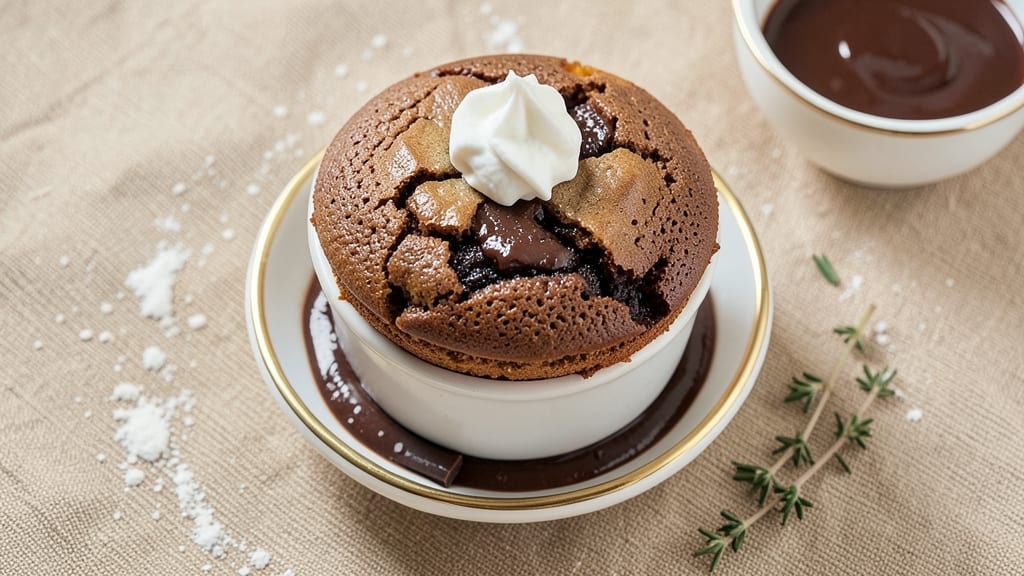
This bittersweet chocolate souffle recipe delivers restaurant-quality results with its signature airy texture and rich, velvety centers. The secret lies in tempering the eggs just right—whisking them to ribbons without overmixing—to create those signature light-as-air clouds.
I've perfected this technique after years of trial and error, ensuring every souffle rises dramatically in the oven and collapses into a decadent, melt-in-your-mouth dessert.
The key to success is using high-quality bittersweet chocolate (70% cocoa) for that perfect balance of intensity and smoothness. We'll incorporate it into a delicate egg custard base, then fold in whipped egg whites to create the signature soufflé structure.
The baking process is precise—just 15 minutes at 375°F—but the reward is worth every minute of attention.
What you'll end up with is a souffle that's impossibly light yet rich, with a crisp exterior and a molten chocolate center that practically oozes when cut. The bittersweet flavor shines through without being overpowering, making this the ideal dessert for chocolate lovers who appreciate nuanced flavors.
Serve immediately with a dusting of cocoa powder for that final touch of elegance.
Perfect for special occasions or when you want to impress dinner guests, this recipe comes together in about 45 minutes (including prep time). The technique might seem intimidating at first, but I'll walk you through every step to ensure foolproof results. Let's create something truly extraordinary together.
Ingredients for bittersweet chocolate souffle
Six eggs, rich chocolate, and a touch of butter create this legendary dessert.
| Ingredient | Amount | Notes |
|---|---|---|
| Large Eggs 🥚 | 6 whole | Room temperature for best results |
| Granulated Sugar 🍚 | ½ cup | Superfine preferred for smooth texture |
| Unsalted Butter 🧈 | 4 tbsp | Cold, cut into small cubes |
| Bittersweet Chocolate (70% cocoa) 🍫 | 6 oz | High-quality, chopped fine |
| All-Purpose Flour 🌾 | 1 tbsp | For dusting ramekins |
| Vanilla Extract 🍯 | ½ tsp | Pure, high-quality preferred |
| Salt 🧂 | ¼ tsp | Fine sea salt preferred |
| Heavy Cream 🥛 | ¼ cup | Cold, for folding |
| Cocoa Powder (unsweetened) 🍫 | 1 tbsp | For dusting tops |
The chocolate makes all the difference here—70% cocoa bittersweet from Valrhona or Guittard delivers that perfect balance of intensity and smoothness. I always buy the bars and chop them myself (a microplane works great) because pre-chopped chocolate tends to clump. The eggs? Room temperature is non-negotiable—cold eggs won't incorporate properly. For the vanilla, Madagascar Bourbon extract has the most complex flavor profile, but any pure extract will work. The butter should be cold when you cut it into cubes—this prevents the custard from breaking.
No vanilla extract? Seeds from one vanilla bean work beautifully (just scrape them out). Short on heavy cream? Whipped cream at half the amount works in a pinch, though the texture won't be quite as stable. For the cocoa powder, Dutch-processed (like Hershey's Special Dark) gives a smoother flavor than natural cocoa. The salt is crucial—don't skip it, even if your chocolate is labeled as low-sodium. And if you're worried about the eggs being too rich, reduce the sugar slightly—this recipe is already decadent enough.
Prep the ramekins ahead of time by dusting them with flour and cocoa powder—this prevents sticking and adds that signature chocolate crust. The soufflés must bake immediately after folding—no waiting. They're best served straight from the oven, but if you need to hold them, keep them warm in a 200°F oven for up to 15 minutes. For make-ahead prep, you can make the chocolate custard base up to 24 hours ahead, then fold in the egg whites just before baking. Store any leftovers (though there shouldn't be any!) in an airtight container in the fridge for up to 2 days
Why You'll Love This Recipe
- No Fuss Setup: I swear by this recipe because it’s the kind of thing you can start while your coffee brews. Just melt butter, chop chocolate (five minutes max), and let the eggs do the heavy lifting—no fancy equipment, no stress.
- Rich Without Overpowering: That 70% cocoa chocolate? It’s the star, but the flour and sugar balance it just right—deep, complex flavor without tasting like a dessert. Honestly, it’s the kind of bite you’ll crave even when you’re not "supposed" to be eating sweets.
- Date Night or Me: Serve it warm with whipped cream for a restaurant-worthy dessert, or let it cool slightly for a make-ahead treat that still feels special. Between us, I’ve used it to impress guests and as a lazy Sunday night reward—no judgment.
- Leftovers? Yes, Please: The soufflé holds up surprisingly well—store it in the fridge for up to two days, and reheat in the oven for a few minutes. (Yes, even on a Tuesday night.) Plus, the ingredients cost next to nothing compared to store-bought desserts.
Step-by-step instructions for bittersweet chocolate soufflé
Here's how to create the perfect soufflé—light, airy, and rich with a molten chocolate center.
Separate Eggs and Whip Meringues to Stiff Peaks
Begin by separating the 6 whole large eggs, placing yolks in one bowl and whites in another. I use a fine-mesh sieve for this—it catches any stray yolk bits that could prevent the whites from whipping properly. Add 0.25 teaspoon salt and 0.5 teaspoon vanilla extract to the egg whites, then whip them on medium speed until soft peaks form.
Gradually increase the speed to high and continue whipping until the meringue forms stiff, glossy peaks that hold their shape when you lift the whisk. This step is crucial—under-whipped meringue won't provide enough structure for the soufflé to rise properly. The bowl should feel cool to the touch, and the meringue should hold its shape when you turn the bowl upside down.
Melt Chocolate and Butter for a Silky Base
In a heatproof bowl set over a pot of simmering water (double boiler), melt together the 6 ounces bittersweet chocolate (70% cocoa) and 4 tablespoons cold, cubed unsalted butter. Stir gently until the chocolate is completely smooth and the butter is fully incorporated. Remove from heat and let cool slightly—it should be warm but not hot to the touch.
While the chocolate cools, whisk in 0.5 cup granulated sugar and 1 tablespoon all-purpose flour until the mixture is completely smooth. This step ensures the chocolate base is properly tempered and ready to fold with the meringue. If the mixture thickens too much, add 1 teaspoon heavy cream to loosen it slightly—this helps create a lighter texture in the final soufflé.
Fold Meringue into Chocolate Base Gently
Using a rubber spatula, fold one-third of the meringue into the chocolate mixture in a gentle, sweeping motion. This technique incorporates air without deflating the meringue. Once combined, add another third and fold again until no streaks remain. The batter should be thick but still pourable—if it's too stiff, you've overmixed and risk a dense soufflé.
Finally, fold in the remaining meringue until just combined. Be careful not to overmix—stop as soon as the batter is uniform. The key here is to preserve as much air as possible while ensuring the chocolate and meringue are fully integrated. The batter should hold its shape when spooned onto a plate but still be light enough to rise dramatically in the oven.
Fill Ramekins and Bake Immediately
Preheat your oven to 375°F and place four 4-ounce ramekins on a baking sheet. Lightly dust the inside of each ramekin with 1 tablespoon unsweetened cocoa powder (shake excess out) to prevent sticking. Divide the batter evenly among the ramekins, filling each about two-thirds full. Tap the ramekins gently on the counter to release any air bubbles.
Bake the soufflés for 12-15 minutes—they're done when the tops are deeply golden brown and the edges pull away slightly from the ramekin. Open the oven carefully; you'll see the soufflés rise dramatically. They should spring back when touched lightly but still feel warm to the touch. Overbaking is the enemy—soufflés continue cooking slightly after removal, so err on the side of underdone.
Dust with Cocoa and Serve Immediately
Remove the soufflés from the oven and immediately dust the tops with the remaining 1 tablespoon unsweetened cocoa powder. Serve right away while they're still warm and puffed—soufflés deflate as they cool. The centers should be molten and gooey, while the exterior remains light and airy. For an extra touch, pair with a dusting of powdered sugar or a dollop of whipped cream.
Here's the thing—soufflés are all about timing. If you're serving a group, keep the ramekins warm in a 200°F oven while you finish plating. And don't be tempted to reheat leftovers; the texture changes completely once cooled. Enjoy these decadent clouds while they're at their peak!
Pro Tips For Making Bittersweet Chocolate Souffle
- Whisk Eggs Like Your Life Depends On It: Split the yolks and whites, then whip the whites to stiff peaks—not just soft ones. I learned this the hard way when my soufflés collapsed like sad pancakes. Use a spotless, grease-free bowl (even a hint of fat will ruin the volume), and don’t overmix the batter after folding in the whites.
- Temper That Chocolate: Chop the bittersweet chocolate into small, even pieces before melting it with the butter—this ensures it melts quickly and evenly. I used to toss in big chunks, and they’d sit like rocks in the sauce, making the texture uneven. A double boiler keeps things smooth without burning.
- Skip the Overbaking: Pull the souffle out of the oven the second it’s puffed and set—even if it looks underdone. Bittersweet chocolate soufflés dry out fast, and once they start sinking, they’re done for. A toothpick test works, but trust your eyes more: golden crust, jiggly center, done.
- Dust the Ramekins: Lightly coat your ramekins with flour, then tap out the excess—this prevents sticking without adding bulk. I used to grease them, but the flour gives a better lift, and it’s less messy than butter. Don’t skip this, or you’ll be scraping souffle off the sides like it’s a crime scene.
Troubleshooting this dish
Egg Whites Not Holding Shape
If your egg whites won't whip to stiff peaks, your bowl might be dirty or greasy—even a tiny bit of fat prevents proper aeration. I always wash my mixing bowl with hot, soapy water and dry it thoroughly before whipping.
Also, make sure your eggs are at room temperature—cold eggs whip poorly. If you're using an electric mixer, try a different whisk attachment or hand-whip for better control. 🥚
Soufflé Collapsing Before Baking
Overmixing the batter is the #1 cause of collapse. Once you fold in the meringue, stop immediately when the batter is just combined—no streaks should remain. Another common issue is under-whipped meringue.
Test by turning the bowl upside down—if the meringue slides out, it's not stiff enough. Also, ensure your oven is fully preheated to 375°F—cold spots can cause uneven rising.
Dense, Cake-Like Texture
This usually means the meringue wasn't properly incorporated or the chocolate base was too thick. When folding, use a rubber spatula and work gently in large, sweeping motions. If your chocolate mixture is too thick after melting, add 1 teaspoon heavy cream to lighten it.
Another trick is to chill the batter for 10 minutes before baking—this helps stabilize the air bubbles for a lighter texture. 💡
Chocolate Not Melting Smoothly
If your chocolate has lumps, it wasn't heated evenly. Always use a double boiler and stir gently until completely smooth. For extra insurance, chop your chocolate into small, even pieces before melting.
I recommend Valrhona or Guittard 70% cocoa bars—they melt more smoothly than lower-quality chocolates. If the mixture separates, whisk vigorously to re-emulsify before proceeding.
Soufflé Not Rising Enough
This could be due to old eggs (older than 1 week) or improperly whipped meringue. Fresh eggs have more structure. Also, check your oven temperature—use an oven thermometer to confirm it's actually 375°F.
Another tip: Don't overfill the ramekins—fill them only two-thirds full to allow room for expansion. If your soufflé rises but then falls immediately, it's likely overbaked—pull them out as soon as they're golden brown.
Molten Center Missing
The key to a gooey center is baking at the right temperature for the right time. If your soufflé is fully set, it was likely in the oven too long. Bake for 12-15 minutes max—they continue cooking slightly after removal.
For extra insurance, use a candy thermometer to check internal temp at 150-160°F. If your center is dry, try reducing the baking time by 1-2 minutes next time. 🔥
Nutrition facts
Frequently asked questions
Can I substitute dark chocolate for bittersweet?
Yes, but the flavor will be slightly sweeter. Use the same amount of 70% cocoa dark chocolate for the best balance. Avoid milk chocolate—it contains too much sugar and fat, which can make the soufflé dense. If you must use a different percentage, reduce the sugar slightly to maintain the bittersweet profile.
How do I know when the soufflés are fully baked?
They're done when the tops are deep golden brown and the edges pull away slightly from the ramekin. Open the oven carefully—they'll rise dramatically! The soufflés should spring back when touched lightly but still feel warm to the touch. 12-15 minutes at 375°F is the perfect window. Overbaking causes collapse, so pull them out as soon as they look done.
Can I make this recipe without a double boiler?
Microwave the chocolate and butter in 20-second intervals, stirring between each, until smooth. Or place the bowl over a pot of simmering water (not boiling) and stir constantly. Just be careful not to overheat—the chocolate should be warm but not hot to the touch before mixing with the yolks.
Why does my soufflé collapse after baking?
Overmixing the batter or under-whipped meringue are the most common causes. Fold the meringue gently in large, sweeping motions until just combined—no streaks should remain. Also, ensure your egg whites are at stiff peaks (they should hold their shape when you lift the whisk). Another tip: Don't open the oven door during baking—temperature fluctuations can cause collapse.
Can I prepare the chocolate custard ahead of time?
Yes! Make the chocolate base (melted chocolate, yolks, sugar, and flour) up to 24 hours ahead and refrigerate it. When ready to bake, let it sit at room temperature for 10 minutes to soften slightly, then fold in the freshly whipped meringue. This saves time but still yields perfect soufflés. Just