
Desserts
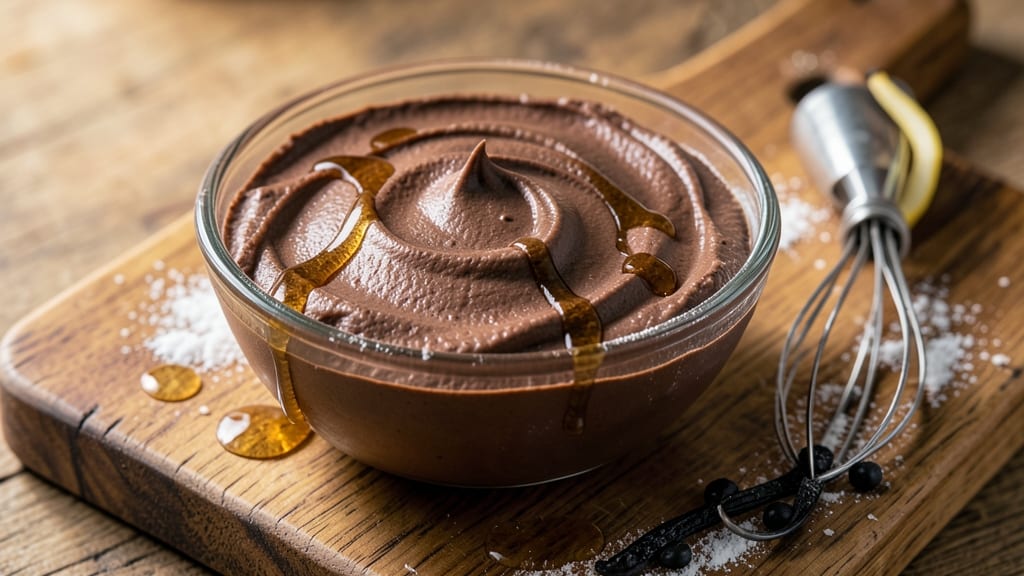
This butterless chocolate frosting delivers restaurant-quality richness without a single stick of butter—perfect for vegan desserts, allergy-friendly treats, or anyone craving a lighter yet decadent finish. ✨ The secret lies in coconut oil’s silky texture and aquafaba’s airy lift, creating a frosting so smooth it spreads like a dream while staying firm enough to pipe.
I developed this recipe after years of testing plant-based alternatives, and it’s finally the one that doesn’t compromise on flavor or texture.
What sets this frosting apart is its foolproof technique: melted coconut oil replaces butter, while aquafaba (chickpea brine) mimics egg whites for that signature fluffiness without dairy or eggs. The result? A velvety, spreadable frosting with deep chocolate notes that pairs beautifully with cakes, cupcakes, or cookies.
No special equipment needed—just a few pantry staples and a hand mixer for that perfect, cloud-like consistency.
By the time you’re done, you’ll have a silky-smooth frosting that’s rich enough to satisfy chocolate lovers but light enough for delicate desserts. It holds its shape when piped yet remains tender enough to melt in your mouth.
The best part? It stays fresh in the fridge for up to a week, making it ideal for prepping ahead or gifting beautifully decorated treats.
Whether you’re decorating a vegan birthday cake, frosting gluten-free cookies, or simply craving a guilt-free indulgence, this frosting delivers restaurant-quality results—without the butter. Let’s get started!
Ingredients for butterless chocolate frosting
Eight game-changing ingredients transform into velvety chocolate perfection—no butter required.
| Ingredient | Amount | Notes |
|---|---|---|
| Unsweetened Coconut Oil 🥥 | ¾ cup | Melted, not solid, for smooth texture |
| Aquafaba 🥜 | ½ cup | Chickpea brine, not water, for stability |
| Dutch-Processed Cocoa Powder 🍫 | 1 cup | Natural or Dutch-processed, no sugar |
| Powdered Sugar 🍚 | 2 cups | Confectioners' sugar, sifted for smoothness |
| Vanilla Extract 🌿 | 1 tbsp | Pure vanilla, not imitation |
| Maple Syrup 🍁 | 2 tbsp | Grade B for depth, not pancake syrup |
| Pinch of Salt 🧂 | ¼ tsp | Fine sea salt, enhances chocolate flavor |
| Almond Milk 🥛 | 1 tbsp | Unsweetened, for smooth consistency |
| Lemon Juice 🍋 | ½ tsp | Fresh, brightens chocolate flavor |
The coconut oil is your secret weapon—Trader Joe’s organic or Thai Kitchen brands melt beautifully and add richness without dairy. For aquafaba, save the brine from canned chickpeas (or use Annie’s brand for consistency). Dutch-processed cocoa powder like Ghirardelli or Valrhona gives that ultra-smooth, velvety finish—no clumps, no bitterness. Powdered sugar should be sifted before mixing to avoid graininess (I use Domino for reliability). The maple syrup adds depth—Grade B has that caramelized note that makes this frosting sing. Skip the imitation vanilla; McCormick Pure or Nielsen-Massey are worth the splurge.
No coconut oil? Avocado oil or vegan butter works in a pinch, but texture may vary. Short on aquafaba? Vegan egg whites (like Just Egg) or aquafaba powder (sold at Whole Foods) can substitute at double the volume. Powdered sugar too clumpy? Blend it yourself with a splash of almond milk for instant smoothness. The lemon juice might seem odd, but it brightens the chocolate—trust me, it balances the richness. For extra decadence, add 1 tsp espresso powder (instant or Starbucks ground) to deepen the chocolate flavor. And if you’re piping, chill the frosting 30 minutes first for cleaner lines.
This frosting stays fresh for up to 1 week in the fridge, sealed tightly in an airtight container. For longer storage, portion into silicone molds or piping bags, then freeze for up to 3 months. Thaw at room temperature—no microwave needed. Pro tip: Line your piping bag with parchment paper for easy cleanup. Leftovers? Spread on gluten-free cookies or vegan brownies—it’s that good. And if it softens in warm rooms? Pop it in the fridge 10 minutes before serving. Worth every second of wait time.
Why You'll Love This Recipe
- No Butter, No Problem: I swear by this frosting—just coconut oil and aquafaba, no fuss. The texture is chef’s kiss: silky but sturdy enough to pipe or spread, and it never melts like butter-based frostings do in summer.
- Rich Without Guilt: Dutch-processed cocoa powder and vanilla extract make this taste like a decadent dessert, but with coconut oil instead of butter. It’s velvety, not grainy, and somehow more intense than most store-bought frostings.
- Leftovers? No Stress: This keeps for days in the fridge—no weird texture changes, no hardening. I’ve used it to top muffins, drizzle over pancakes, or even mix into coffee (yes, really) without a hitch.
- Budget-Friendly Luxury: Powdered sugar and cocoa powder stretch my dollar, and aquafaba is basically free if you already cook beans. It’s the kind of frosting I make when I want to impress but don’t want to break the bank.
Step-by-step instructions for silky smooth butterless chocolate frosting
This frosting comes together faster than you can say "vegan" and tastes even better.
🍳 Step 1: Whip the Aquafaba to Stiff Peaks
In a clean, grease-free mixing bowl, combine the 0.5 cup aquafaba. Using a hand mixer or stand mixer fitted with the whisk attachment, beat on high speed for 4-5 minutes until the aquafaba forms stiff, glossy peaks that hold their shape when the whisk is lifted. You'll notice it starts foamy, then thickens dramatically—this is your signal it's ready.
Here's the thing—don't skip this step. Properly whipped aquafaba is what gives this frosting its silky texture and stability. If it doesn't reach stiff peaks, your frosting will be too runny. I like to wipe down the whisk between batches to prevent any coconut oil residue from interfering with the volume.
👨🍳 Step 2: Melt and Cool the Coconut Oil
In a small microwave-safe bowl, melt the 0.75 cup unsweetened coconut oil in 20-second bursts, stirring between each, until completely liquid. Let it cool for 5 minutes until it reaches room temperature—it should be warm but not hot to the touch. This prevents the aquafaba from deflating when you add it.
I press down gently on the oil with a spoon to check its temperature. If it's still too warm, it'll cook the aquafaba and make your frosting grainy. The oil needs to be just warm enough to incorporate smoothly but cool enough to preserve that perfect whip.
🥘 Step 3: Gradually Combine Wet Ingredients
With the mixer running on low speed, slowly pour the melted coconut oil into the whipped aquafaba. Add the 1 tbsp vanilla extract, 2 tbsp maple syrup, 1 tbsp almond milk, and 0.5 tsp lemon juice all at once. Mix for 1 minute until fully incorporated and the mixture is smooth and creamy.
This is where the magic happens—the coconut oil emulsifies with the aquafaba, creating that velvety texture we're after. If you add the oil too quickly, you'll deflate the aquafaba. That's why we go slow and let the mixer do the work. The lemon juice might seem odd, but it brightens the chocolate and balances the sweetness beautifully.
🍳 Step 4: Add Cocoa Powder and Sugar
With the mixer still running on low speed, sift in the 1 cup Dutch-processed cocoa powder and mix for 30 seconds to combine. Then gradually add the 2 cups powdered sugar and the 0.25 tsp pinch of salt, mixing on medium speed for 2-3 minutes until completely smooth and glossy.
Here's a pro tip: Sift the cocoa powder first to prevent clumping. As you mix, scrape down the sides of the bowl occasionally to ensure even distribution. The frosting should thicken as you add the sugar—if it looks too thin, add 1-2 tablespoons more powdered sugar. If it's too thick, add 1 teaspoon almond milk to loosen it.
⏰ Step 5: Whip to Perfect Consistency
Increase the mixer speed to high and whip for 3-4 minutes until the frosting is light, fluffy, and pipeable. It should hold its shape when piped but still be smooth enough to spread. The texture should be thick enough to stay on cakes but still spreadable—like frosting from your favorite bakery.
If the frosting is too thick, add 1 teaspoon almond milk at a time until it reaches the right consistency. If it's too thin, add 1 tablespoon powdered sugar and whip again. The frosting should be cool to the touch—if it's warm, pop it in the fridge for 10-15 minutes before using to help it set properly.
Pro Tips For Making Butterless Chocolate Frosting
- Whip Coconut Oil Cold: Grab that solid block of coconut oil straight from the fridge—no melting required. I used to melt it first, and the frosting always ended up grainy. Cold oil emulsifies better with the aquafaba, giving you that silky texture without the struggle.
- Sift the Cocoa Powder: Skip the clumps by sifting that Dutch-processed cocoa powder before mixing. I learned this the hard way when my first batch had gritty pockets—now I treat it like flour. A fine-mesh strainer works, or just shake it through a folded paper towel.
- Whisk Aquafaba Hot: Heat the aquafaba to 160°F (70°C) first—just until tiny bubbles form at the edges. Cool it slightly before whipping, or you’ll end up with a sad, flat mess. It’s the only way to get that proper meringue-like stiffness without eggs.
- Sweeten Gradually: Don’t dump all the powdered sugar at once—add it in ¼-cup increments while mixing. I used to toss it all in, and the frosting turned dry and crumbly. Patience here guarantees a smooth, spreadable consistency every time.
Essential equipment for perfect results
Hand Mixer Essentials
You’ll need a hand mixer or stand mixer with a whisk attachment to achieve that signature fluffy texture. I swear by my Cuisinart SM-50BC for its powerful motor—it handles aquafaba like a dream.
For budget-friendly options, the Hamilton Beach 64440 works perfectly for smaller batches. Just ensure your bowl is grease-free and dry to prevent slipping or residue. 💫
Mixing Bowls Matter
Use a medium-sized stainless steel bowl (at least 3-quart capacity) for proper aeration. Glass bowls can crack under high-speed mixing, while plastic may retain odors. My go-to is a OXO Good Grips stainless steel bowl—it’s durable, non-reactive, and easy to clean.
Avoid wide, shallow bowls, as they make whipping aquafaba more difficult.
Measuring Tools
Precision is key with powdered sugar and cocoa powder. Invest in a scale for accurate measurements—I use a OXO Good Grips digital scale for cocoa powder to avoid clumping.
For liquids, a liquid measuring cup with clear markings ensures you get the exact 0.5 cup aquafaba and 0.75 cup coconut oil. A fine-mesh sieve is a game-changer for sifting cocoa powder smoothly.
Piping Bags & Tips
For decorating, a disposable piping bag (like Ateco 807) and round tips (Wilton #1M or #2) work wonders. If you’re spreading frosting, a flexible offset spatula (like Michaelsen 341) helps create smooth layers.
Pro tip: Line your piping bag with parchment paper for easy cleanup—no more sticky messes! 🎂
Temperature Gauge
A kitchen thermometer ensures your coconut oil is warm but not hot (ideal temp: 100-110°F). I use a Thermoworks Thermapen ONE—it’s fast and accurate. Overheating oil will deflate your aquafaba, so this small tool prevents costly mistakes. For melting coconut oil, 20-second microwave bursts with stirring are foolproof.
Storage Containers
Store leftovers in an airtight container (like Rubbermaid Brilliance) to maintain freshness. For freezing, silicone molds (Amazon Basics) or piping bags work best. Label containers with the date—this frosting stays fresh for 1 week refrigerated or 3 months frozen. A small ramekin is perfect for single-serving portions. ✨
Nutrition facts
Frequently asked questions
Why does this frosting need aquafaba instead of butter?
Aquafaba (chickpea brine) acts as a natural leavening agent, creating air pockets that mimic butter's richness without dairy. It also stabilizes the frosting, giving it that perfect fluffy texture while keeping it smooth and spreadable. The coconut oil replaces butter's fat content, providing creaminess without solidifying in cold temperatures.
Can I make this frosting without coconut oil?
Yes! Substitute with avocado oil or vegan butter (like Earth Balance), but expect slight texture differences. For best results, use equal amounts. If using vegan butter, let it soften first and add it gradually while mixing to avoid graininess. The frosting will still taste delicious but may be slightly denser.
How do I fix frosting that's too thick or too thin?
For thick frosting, add 1 teaspoon almond milk at a time while mixing. For thin frosting, sprinkle in 1 tablespoon powdered sugar and whip again. If it's still not right, adjust gradually—overcorrecting can ruin the balance. Chill the frosting for 10 minutes if it's too soft, or warm it slightly (not hot) if it's too stiff.
Will this frosting work for piping decorations?
Once fully chilled (30 minutes in the fridge), this frosting holds its shape beautifully for piping. Use a disposable piping bag with a round tip (like Wilton #1M) for rosettes or borders. For best results, keep the frosting cool while piping—warm frosting will ooze and lose its structure.
Can I use this frosting on non-vegan desserts?
Yes, but check your ingredients first! This frosting is naturally dairy-free and egg-free, making it safe for most dietary restrictions. It works perfectly on gluten-free cakes, regular flour cakes, or even as a filling for brownies. Just ensure your base dessert doesn't contain dairy if you're avoiding it completely.