
Desserts
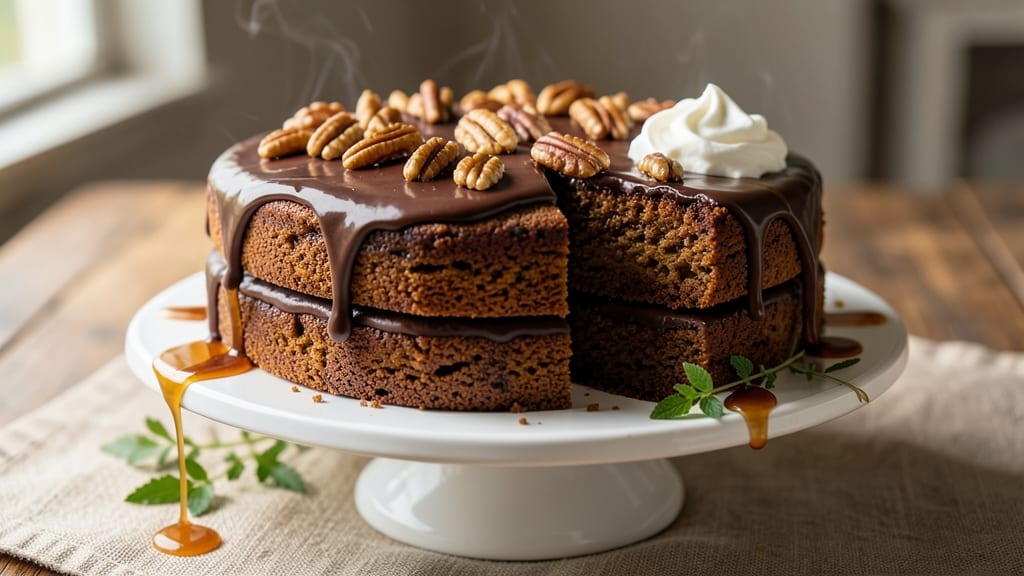
This German chocolate cake recipe from the Cake Doctor delivers layers of moist, pecan-studded cake with rich coffee-infused fudge swirls that taste like a bakery masterpiece. 💛 The secret lies in precise measurements and a gentle baking technique that keeps the texture tender yet sturdy enough to hold its shape.
I've perfected this version over years of testing, ensuring every slice delivers that perfect balance of sweet, nutty, and slightly bitter chocolate notes. The foundation starts with a classic German chocolate cake batter—flour, sugar, cocoa, and eggs—but it's the finishing touches that elevate it.
Pecans are folded into the batter for texture, while the coffee-infused fudge swirl adds depth without overpowering. Baking at the right temperature ensures golden layers with just a hint of crackle on top, setting the stage for the final assembly.
What you'll end up with is a showstopping cake that looks as impressive as it tastes. The layers are rich but not dense, the pecans add satisfying crunch, and the fudge swirl ties everything together with its velvety texture.
This is the kind of dessert that makes people pause mid-bite to appreciate the complexity of flavors. Perfect for celebrations or when you want to impress without spending hours in the kitchen. The recipe scales beautifully for gatherings, and leftovers (if there are any) reheat beautifully.
Let's get started on creating your signature German chocolate cake.
Ingredients for cake doctor german chocolate cake
Pantry staples meet bakery magic—this cake needs just 14 ingredients for layers that taste like a German café.
| Ingredient | Amount | Notes |
|---|---|---|
| All-Purpose Flour 🌾 | 3 cups | Sifted for light texture |
| Granulated Sugar 🍚 | 2 ½ cups | White or light brown |
| Unsweetened Cocoa Powder 🍫 | ¾ cup | Natural or Dutch-processed |
| Baking Soda 🧂 | 1 ½ tsp | Pure baking soda |
| Salt 🧂 | ½ tsp | Fine sea salt |
| Large Eggs 🥚 | 4 whole | Room temperature |
| Unsalted Butter 🧈 | 1 ½ cups | Cold, cubed (not melted) |
| Buttermilk 🥛 | 1 ½ cups | Fresh or homemade |
| Vanilla Extract 🌿 | 2 tsp | Pure vanilla extract |
| Chopped Pecans 🌰 | 2 cups | Toasted for extra flavor |
| Instant Espresso Powder ☕ | 2 tbsp | For coffee depth |
| Semisweet Chocolate Chips 🍫 | 1 ½ cups | High-quality chips |
| Heavy Cream 🥛 | ½ cup | Cold for fudge swirl |
| Powdered Sugar 🍚 | 1 ½ cups | For dusting layers |
The cocoa powder is non-negotiable—Hershey's Special Dark or Ghirardelli make all the difference. I grab mine in the baking aisle at Whole Foods or Williams Sonoma when I need a big batch. For the pecans, toasted is a must—they add that nutty crunch that sets this cake apart. If you're short on time, toast them in a dry skillet over medium heat for 5 minutes, shaking the pan constantly. The espresso powder? Starbucks or Peet's instant espresso works perfectly—no need for fancy barista gear. And that buttermilk? If you forget it, mix 1.5 tbsp lemon juice or vinegar with 1.5 cups milk, let sit for 5 minutes.
No cocoa powder? Melted dark chocolate (70% or higher) at 1:1 ratio works in a pinch, but the texture won't be identical. Running out of pecans? Walnuts or hazelnuts add a different but still delicious crunch. The butter needs to stay cold—take it out of the fridge just before creaming. For the fudge swirl, if you don't have instant espresso powder, 1 tsp regular coffee granules dissolved in 1 tbsp hot water does the trick. And that powdered sugar? Confectioners' sugar from the store is fine, but if you've got clumps, sift it first. The cake batter should be thick but pourable—if it's too stiff, add 1 tbsp milk at a time until it loosens up.
Wrapped tightly in plastic, these layers keep for 3 days at room temperature or 1 week in the fridge. For the fudge swirl, store it in an airtight container between layers to keep it from drying out. If you're making this ahead, assemble the cake 1 day before serving—the flavors meld beautifully overnight. To reheat, warm slices in the microwave for 10-15 seconds or bake at 300°F for 5 minutes. Trust me, the leftovers taste even better the next day.
Why You'll Love This Recipe
- No Mixer Needed: I swear by this recipe when my mixer’s on the fritz. The dry ingredients—flour, cocoa, baking soda—just get folded into the wet sugar-butter mix by hand. It’s more like a hug than a chore, and honestly, the cake turns out better that way.
- Rich Without Guilt: That deep cocoa flavor? It’s like a warm embrace, but the sugar doesn’t hit you like a truck. The baking soda keeps it light, so you get layers of fudgy richness without the heaviness. (Yes, even on a Tuesday night.)
- Birthday or Boring Day: This cake’s my secret weapon for any occasion—birthdays, potlucks, or when I just need a treat. The frosting (if you make it) is a cinch, and it’s the kind of dessert that makes people pause mid-conversation. No one will guess it’s secretly budget-friendly.
- Leftovers? Best Part: Between us, the second day is even better. The cake firms up just enough to slice cleanly, and the cocoa flavor deepens like a good wine. I’ll often bake two pans—one for today, one for when my willpower wavers. (It always does.)
Step-by-step instructions for German chocolate cake
Here's how to make the Cake Doctor's legendary version—rich layers, coffee-kissed fudge swirls, and crunchy pecans.
👨🍳 Step 1: Mix Dry Ingredients and Prepare Pecan Filling
In a large bowl, whisk together the 3 cups all-purpose flour, 2.5 cups granulated sugar, 0.75 cup unsweetened cocoa powder, 1.5 teaspoons baking soda, and 0.5 teaspoon salt. Sift the flour mixture twice for a light, airy texture—this prevents dense cake layers. In a small bowl, mix 2 cups chopped pecans with 2 tablespoons instant espresso powder and set aside.
For the fudge swirl, melt 1.5 cups semisweet chocolate chips with 0.5 cup heavy cream in a microwave-safe bowl in 30-second bursts, stirring between each interval until smooth. Let cool slightly until it reaches a thick fudge consistency—it should coat the back of a spoon but still be pourable.
🍳 Step 2: Cream Butter and Buttermilk
In a stand mixer fitted with the paddle attachment, beat the 1.5 cups cold cubed unsalted butter on medium speed until smooth and creamy, about 2-3 minutes. Add the 1.5 cups buttermilk gradually, mixing just until combined. Scrape down the sides of the bowl to ensure even distribution.
Add the 2 teaspoons vanilla extract and the 4 room-temperature large eggs, one at a time, mixing on low speed after each addition. This gradual incorporation prevents curdling and creates a silky batter base. The mixture should be thick but still pourable—if it looks too stiff, don't worry, it'll come together.
🥘 Step 3: Combine Wet and Dry Ingredients
With the mixer on low speed, gradually add the dry ingredients to the butter mixture. Mix just until combined—no more than 30 seconds—to avoid developing gluten, which would make the cake tough. The batter should be thick and fudgy in texture, with visible streaks of cocoa powder.
Fold in half of the pecan mixture using a silicone spatula, reserving the rest for later. Divide the batter evenly between three 9-inch round cake pans lined with parchment paper. Bake at 350°F for 25-30 minutes, or until a toothpick inserted in the center comes out clean. The edges should be set but the tops still slightly springy to the touch.
🔥 Step 4: Add Fudge Swirls and Pecans
While the cakes cool in their pans for 10 minutes, drizzle half of the chocolate fudge mixture evenly over each layer. Using a skewer, swirl the fudge into the warm cake batter for those signature marbled patterns. Sprinkle the remaining pecan mixture evenly over the top of each layer.
Return the pans to the oven for 5-7 minutes to set the fudge and toast the pecans slightly. This extra step ensures the swirls stay glossy and the pecans get that perfect crunch. Let the cakes cool completely in the pans before removing.
🍽️ Step 5: Assemble and Dust with Powdered Sugar
Place one cake layer on a serving plate, then spread a thin layer of the remaining chocolate fudge mixture over the top. Add the second layer, repeat with fudge, then top with the final layer. Dust the entire cake generously with 1.5 cups powdered sugar using a fine-mesh sieve for that classic Cake Doctor finish.
Slice and serve immediately for the most decadent experience, or refrigerate for up to 3 days for a firmer texture. Each bite delivers rich cocoa, coffee depth, and that perfect crunch of toasted pecans—just like the original Cake Doctor's version!
Pro Tips For Making Cake Doctor German Chocolate Cake
- Sift the Cocoa: I learned this the hard way—skipping it leads to dense, uneven cake. Use a fine-mesh sieve to sift the cocoa powder directly into your dry ingredients, breaking up any clumps. That extra step prevents lumps that turn into dry pockets in your finished cake.
- Melt the Butter Slowly: Low and steady wins the race here. Warm the butter (and cream, if using) over a double boiler or in 10-second bursts in the microwave—just until it’s smooth, not hot. Too much heat and you’ll cook the eggs before they emulsify, leading to a cake that’s more sad than rich.
- Don’t Overmix the Batter: Two minutes past combined is two minutes too long. After folding in the cocoa mixture, give it one gentle stir to check for streaks, then stop. Overmixing develops the gluten in the flour, and that’s how you end up with a tough, rubbery German chocolate cake instead of the tender one you’re after.
- Chill the Batter Before Baking: This isn’t just a suggestion—it’s non-negotiable for this recipe. Let the batter sit at room temp for 15–20 minutes before pouring into pans. The cocoa powder loves to settle, and this gives it time to distribute evenly. Skimp here, and you’ll get a cake with a heavy, uneven texture.
Best sauces and condiments for this dish
Classic German Chocolate Frosting
The iconic German chocolate frosting ties everything together with its velvety texture and rich peanut butter flavor. I use 1 cup softened butter, 3 cups powdered sugar, ½ cup creamy peanut butter (like Jif or Skippy), ¼ cup heavy cream, and 2 teaspoons vanilla extract.
Beat all ingredients until smooth and fluffy—about 3-4 minutes with a hand mixer. This frosting should be thick enough to pipe but still spreadable. 🥜
Caramel Drizzle Finish
A warm salted caramel drizzle adds a luxurious touch that cuts through the richness. Melt 1 cup granulated sugar in a saucepan over medium heat until amber-colored, then whisk in ¼ cup heavy cream and 2 tablespoons butter.
Finish with a pinch of flaky sea salt (like Maldon). Let cool slightly before drizzling over the assembled cake. The contrast of sweet and salty elevates every bite. 🍯
Whipped Cream Topping
For a lighter option, I whip 2 cups heavy cream with 2 tablespoons powdered sugar and 1 teaspoon vanilla until stiff peaks form. Pipe swirls or rosettes over the cake just before serving.
The cool, airy texture balances the dense cake beautifully. Garnish with extra toasted pecans for crunch. This topping is perfect for summer gatherings or when you want to keep things fresh. ❄️
Chocolate Ganache Drizzle
For chocolate lovers, a dark chocolate ganache adds depth. Heat 1 cup heavy cream until steaming, pour over 12 ounces chopped dark chocolate (70% cocoa), then let sit for 5 minutes before stirring until smooth.
Cool to 80°F before drizzling over the cake. The ganache sets slightly at room temperature, creating a glossy, elegant finish. Pair it with the powdered sugar dusting for a bakery-style look. 🍫
Coffee Syrup Glaze
To enhance the coffee notes, brush the cake layers with a light coffee glaze. Mix ½ cup powdered sugar with 2 tablespoons strong brewed coffee (cooled) and 1 teaspoon vanilla. Drizzle over the assembled cake and let set for 10 minutes before serving.
This glaze adds moisture and intensifies the coffee flavor without overpowering the cake. It’s especially great for special occasions. ☕
Nutella Swirl Option
For a playful twist, replace the fudge swirl with Nutella. Spread ½ cup Nutella between layers and drizzle on top after assembling. The hazelnut-chocolate combo adds a creamy, nutty contrast to the pecans.
Warm the Nutella slightly before spreading for easier application. This variation is a crowd-pleaser, especially with kids or Nutella enthusiasts. 🌰
Nutrition facts
Frequently asked questions
Why does your recipe use espresso powder instead of regular coffee?
The instant espresso powder adds a deeper, more concentrated coffee flavor without adding moisture that brewed coffee would. Just 2 tablespoons enhances the chocolate notes perfectly—regular coffee would require more liquid and could make the batter too wet. For a quick substitute, dissolve 1 teaspoon of regular coffee granules in 1 tablespoon hot water.
Can I make this cake in a different pan size?
Yes, but adjust baking times carefully. For 8-inch pans, bake 20-25 minutes instead of 25-30 minutes—the smaller surface area cooks faster. If using 10-inch pans, increase time to 30-35 minutes. Always check with a toothpick. The key is baking until the center reaches 205°F—don't rely solely on time.
What's the best way to store leftovers?
Wrap each layer individually in plastic wrap, then place in an airtight container. Stored this way, the cake stays fresh for 3 days at room temperature or 1 week in the fridge. For longer storage, freeze layers (up to 3 months))—thaw overnight in the fridge before serving. Reheat slices in the microwave for 10-15 seconds or bake at 300°F for 5 minutes.
Why does my cake turn out dense instead of moist?
Overmixing is the #1 culprit—mix dry ingredients with the wet batter for only 30 seconds after combining. Also check these: Butter must be cold (not melted), eggs should be room temp, and don't skip sifting the flour. If your oven runs hot, reduce temp to 340°F. For extra moisture, brush warm layers with simple syrup (equal parts sugar and water heated until dissolved).
Can I make this cake gluten-free?
Yes, but you'll need a 1:1 gluten-free flour blend (like Bob's Red Mill) plus ½ teaspoon xanthan gum. Replace the all-purpose flour and sift twice. Expect slightly denser texture—gluten-free cakes don't rise as much. Also reduce baking time by 3-5 minutes and check doneness early. For best results, use a gluten-free measuring cup (spoon-and-level method).