
Desserts
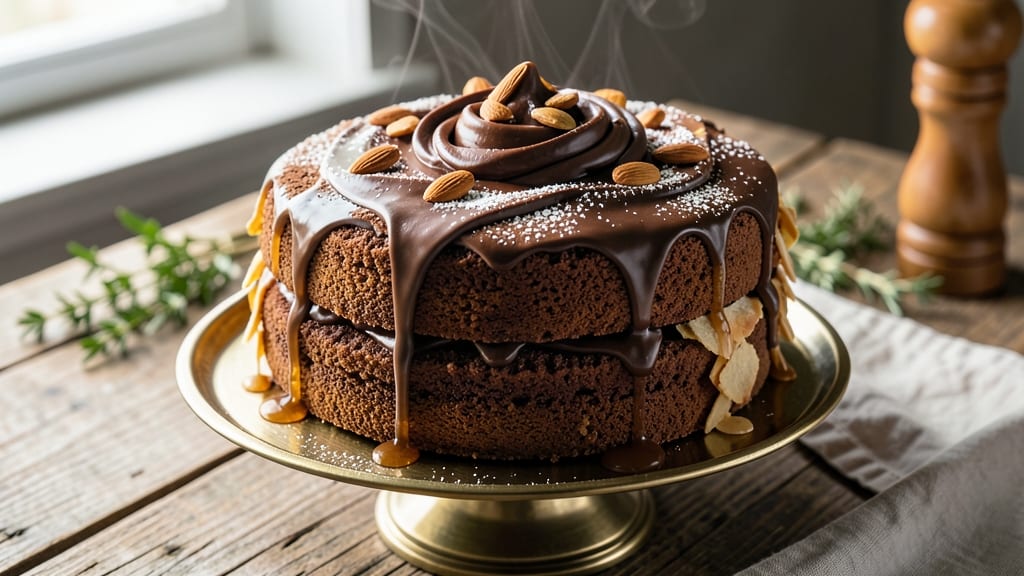
This carob chocolate cake recipe delivers all the rich, fudgy satisfaction of classic chocolate cake—without cocoa powder in sight. 🌟 The secret lies in carob’s naturally sweet, slightly nutty flavor that mimics chocolate’s depth while offering a lighter texture.
I’ve perfected this recipe over years of baking experiments, ensuring it’s moist, tender, and perfect for vegan diets or those avoiding cocoa.
The cake’s magic comes from a simple yet effective technique: combining carob powder with warm liquid ingredients to create a smooth batter that bakes into a dense, velvety crumb.
Unlike traditional chocolate cakes, this version stays moist for days thanks to a touch of applesauce and a 350°F bake time of 30–40 minutes. The frosting—a velvety vegan cream cheese glaze—ties everything together with its tangy-sweet balance.
What you’ll end up with is a cake that looks and tastes like a decadent dessert but with a lighter profile. The carob’s natural sweetness means less sugar is needed, and the nutty undertones add complexity that chocolate lovers will adore.
It’s ideal for birthdays, holidays, or whenever you crave something rich but guilt-free. For those worried about texture, don’t be—this cake holds its shape beautifully while staying tender. The frosting sets perfectly without cracking, making it easy to slice and serve.
Whether you’re vegan, allergic to cocoa, or simply curious about carob, this recipe delivers on every level.
Ingredients for carob chocolate cake
Carob powder and plant-based staples transform into a decadent cake with chocolate-like richness.
| Ingredient | Amount | Notes |
|---|---|---|
| Carob Powder 🍫 | ¾ cup | High-quality, unsweetened carob |
| Unsweetened Applesauce 🍎 | ½ cup | For moisture and binding |
| Granulated Cane Sugar 🍚 | 1 ½ cups | Or coconut sugar for refined option |
| Almond Milk 🥛 | 1 cup | Unsweetened, room temperature |
| Melted Coconut Oil 🥥 | ½ cup | Cool before mixing |
| Vanilla Extract 🌿 | 2 tsp | Pure, high-quality extract |
| All-Purpose Flour 🌾 | 2 cups | Gluten-free blend if needed |
| Baking Soda 🧂 | 1 tsp | For proper rise |
| Salt 🧂 | ½ tsp | Fine sea salt preferred |
| Ground Flaxseed 🌾 | 1 tbsp | For egg substitute |
| Water 💧 | 3 tbsp | To mix with flaxseed |
| Vegan Cream Cheese 🧀 | 8 oz | For frosting, softened |
| Powdered Sugar 🍚 | 2 cups | Sifted for smooth frosting |
| Lemon Juice 🍋 | 1 tbsp | Freshly squeezed |
For the carob powder, Bob's Red Mill or NOW Foods brands are excellent choices—look for unsweetened varieties to control sweetness precisely. The quality of carob powder directly impacts flavor depth, so avoid pre-sweetened blends. Almond milk should be unsweetened to prevent over-sweetening the batter; Silk or Blue Diamond are reliable options. Coconut oil should be melted but not overheated—just warm until liquid. The flaxseed egg substitute is crucial for binding, so ensure your flaxseed is freshly ground for maximum effectiveness. For the frosting, Kite Hill vegan cream cheese provides the best texture, though Miyoko's is a close second.
No carob powder? Cocoa powder with 1 tsp instant coffee dissolved in the almond milk mimics the nutty depth, though results won't be identical. Substitute applesauce with mashed banana or pumpkin puree for moisture, though texture may vary slightly. For the frosting, cashew cream (blended soaked cashews) works beautifully if you prefer a lighter consistency. If you don't have powdered sugar, blend granulated sugar in a food processor until fine. The lemon juice in the frosting can be omitted if you prefer a sweeter glaze, but it balances the richness perfectly.
Store cake layers wrapped in parchment paper at room temperature for up to 3 days or refrigerate for 5 days. Frosting can be made 1 day ahead and stored in the fridge—bring to room temperature before using. For longer storage, freeze layers (unfrosted) for 3 months300°F for 10 minutes to restore moisture. The frosting can be piped directly onto chilled cake layers for clean edges, or spread with a spatula for a rustic finish.
Why You'll Love This Recipe
- No Mixer Needed: The applesauce does all the heavy lifting here—no eggs, no butter, no fuss. Just blend, pour, and bake. I swear, I’ve made this in a mug when I was too tired to turn on the oven.
- Rich Without Guilt: That carob powder? It’s like chocolate’s sophisticated cousin—deep, slightly bitter, and totally satisfying without the sugar crash. The coconut oil keeps it moist, but the cane sugar balances it just right. Honestly, I reach for this over regular chocolate cake now.
- Leftovers That Last: This cake holds up for days in the fridge, and slices reheated for 10 seconds make for a quick breakfast or after-school snack. Between us, my kids ask for it more than their actual dessert.
- Budget-Friendly Luxury: Almond milk and applesauce stretch every ingredient further, and carob powder is cheaper than cocoa. I’ve made this for birthday parties, potlucks, and even just because—no one ever guesses it’s not the “real” thing. (Yes, even on a Tuesday night.)
Step-by-step instructions for carob chocolate cake
This method delivers a rich, nutty-sweet carob cake with perfect moisture and texture every time.
👨🍳 Step 1: Prepare the Flax Egg and Mix Wet Ingredients
In a small bowl, combine the 1 tablespoon ground flaxseed with the 3 tablespoons water. Let it sit for 5 minutes until it thickens into a gel-like consistency—this acts as our egg substitute. Meanwhile, in a large mixing bowl, whisk together the 0.75 cup carob powder, 1.5 cups granulated cane sugar, 0.5 cup melted coconut oil (cooled to room temperature), and 2 teaspoons vanilla extract until smooth.
I like to use a hand mixer here for about 1 minute to ensure the carob powder fully dissolves and the mixture becomes homogeneous. The carob powder has a tendency to clump, so this step prevents any gritty texture in your final cake. Add the 1 cup almond milk next, mixing just until combined—don't overmix or you'll develop gluten in the flour later.
👨🍳 Step 2: Combine Dry Ingredients and Form the Batter
In a separate bowl, sift together the 2 cups all-purpose flour, 1 teaspoon baking soda, and 0.5 teaspoon salt. This sifting step is crucial—it aerates the flour and prevents dense cake layers. Gradually add the dry ingredients to your wet mixture while mixing on low speed, alternating with the 0.5 cup unsweetened applesauce.
After adding all the dry ingredients, mix on low just until combined—you should still see some flour streaks. The applesauce adds moisture and helps create that tender crumb. Once fully incorporated, fold in the flax egg mixture using a spatula until just combined. Here's where it gets important: don't overmix. You're looking for a thick, slightly sticky batter that holds its shape when dropped from a spoon.
🔥 Step 3: Bake to Perfect Doneness
Preheat your oven to 350°F and prepare two 8-inch round cake pans by greasing them thoroughly with coconut oil and lining the bottoms with parchment paper. Divide your batter evenly between the two pans—you should have about 1 cup per pan. Tap each pan gently on the counter to remove any air bubbles and ensure even distribution.
Bake for 25-30 minutes, or until a toothpick inserted into the center comes out clean with just a few moist crumbs clinging to it. The cake should spring back slightly when pressed gently in the center. I know it's tempting to open the oven early, but resist—carob cakes can dry out quickly if overbaked. If the tops brown too quickly, tent loosely with foil after 15 minutes to prevent over-browning while still allowing steam to escape.
⏰ Step 4: Cool and Prepare the Frosting
Remove the cakes from the oven and let them cool in their pans for 10 minutes, then transfer to a wire rack to cool completely. While they're cooling, prepare the frosting by beating the 8 oz vegan cream cheese with an electric mixer until smooth. Gradually add the 2 cups powdered sugar and 1 tablespoon lemon juice, mixing on medium speed until light and fluffy—about 2-3 minutes. The lemon juice brightens the carob flavor beautifully.
Once the cakes are completely cool (this is important—they'll be crumbly if warm), level the tops if needed, then frost generously between the layers and on the outside. Here's the professional trick: spread a thin layer of frosting on the cake first, then add the remaining frosting on top. This creates clean, professional-looking sides. Chill the frosted cake in the refrigerator for 30 minutes before slicing to let the frosting set properly.
Pro Tips For Making Carob Chocolate Cake
- STOP WHISKING TOO SOON: The second you mix in the applesauce, the batter will look like a science experiment gone wrong—thin and gloopy. Let the carob powder and sugar fully dissolve in the almond milk first (whisk for 30 seconds), then add the applesauce and oil last. This keeps the structure tight instead of turning it into a sad, dense brick.
- MELT COCONUT OIL RIGHT: Cold coconut oil? Big mistake. Warm it to 100°F (just until it’s liquid but not hot) before mixing—this ensures even distribution and prevents clumping in the batter. I learned this the hard way when my cake turned out greasy and uneven. A 30-second microwave zap does the trick.
- DON’T OVERMIX THE BATTER: After folding in the dry ingredients, stop as soon as they’re just combined. Overmixing introduces air bubbles that collapse during baking, leaving you with a cake that’s dense and tough. Think "marbled swirls," not "whipped meringue."
- USE ROOM-TEMP ALMOND MILK: Cold almond milk separates when mixed with carob, creating a weird, grainy texture. Give the carton a quick shake, then let it sit for 5 minutes before measuring—this keeps the batter smooth and prevents lumps. (Yes, even if you’re impatient like me.)
Common mistakes when making your carob chocolate cake
Overmixing the Batter
The most common mistake is overmixing the batter after adding the dry ingredients. When you mix too aggressively, you develop gluten in the flour, which creates a tough, dense cake instead of the tender crumb we want.
I’ve seen this happen when people use a stand mixer on high speed or whip the batter vigorously by hand. Instead, mix just until combined—you should still see some flour streaks. A gentle fold with a spatula works best after adding the flax egg mixture. 💡
Skipping the Flax Egg Rest
Many people forget to let the flax egg mixture sit for the full 5 minutes before adding it to the batter. This resting time allows the flaxseed to fully gel, which is crucial for binding the cake. If you skip this step, your cake may turn out dry or crumbly.
I always set a timer and make sure the mixture is thick and gel-like before incorporating it. Pro tip: If you’re in a hurry, you can microwave the flax mixture for 30 seconds to speed up the process. ⏱️
Incorrect Carob Powder Measurement
Carob powder is lighter than cocoa powder, and using too much can make your cake bitter or overly dry. Some people scoop directly from the bag, which compresses the powder and leads to inaccurate measurements.
Always use a kitchen scale or measure by volume with a spoon and level it off. I recommend Bob’s Red Mill carob powder—it’s finely ground and measures consistently. If your cake tastes too bitter, reduce the carob by 1-2 tablespoons next time. 🍫
Overbaking the Cake
Carob cakes are more delicate than traditional chocolate cakes, and they dry out quickly if overbaked. The moment a toothpick comes out clean is the perfect time to remove it from the oven—even if it feels underdone.
I’ve ruined cakes by checking too early and then baking them too long to compensate. If your cake browns too quickly, tent it with foil after 15 minutes to prevent over-browning while still allowing steam to escape. 🔥
Using Cold Ingredients
Cold ingredients, especially the coconut oil and almond milk, can cause the batter to separate or create pockets of dryness in the cake. Always use room-temperature ingredients for a smooth, even texture.
If your coconut oil is solid, warm it gently in a bowl over hot water until just melted, then let it cool slightly before mixing. I also recommend warming the almond milk to 70°F for best results. ❄️
Frosting Too Soon
Applying frosting to warm or partially cooled cake layers is a recipe for disaster—it’ll melt, making a messy glaze instead of a smooth finish. Always let the cakes cool completely on a wire rack before frosting.
If you’re in a rush, chill the layers in the fridge for 15 minutes before assembling. This also helps the frosting set properly, giving you clean, professional-looking sides. 🧀
Nutrition facts
Frequently asked questions
Can I substitute carob powder with cocoa powder in this recipe?
While you can use cocoa powder, the flavor will be different. Carob has a naturally sweet, nutty profile that mimics chocolate without bitterness. For a closer match, mix 0.75 cup cocoa powder with 1 tsp instant coffee dissolved in the almond milk to enhance depth. However, carob’s lighter texture and natural sweetness make it ideal for this recipe.
Why does my carob cake turn out dense or dry?
Overmixing the batter or overbaking are the most common causes. Mix just until combined after adding dry ingredients, and remove the cake when a toothpick comes out clean (not before). Carob cakes dry out faster than chocolate cakes, so avoid opening the oven early. Let it cool completely before frosting too.
Can I make this cake gluten-free?
Replace the 2 cups all-purpose flour with a 1:1 gluten-free baking blend (like Bob's Red Mill). Add 0.5 tsp xanthan gum if your blend doesn't include it. The rest of the recipe remains the same—just ensure your other ingredients (like carob powder) are certified gluten-free.
How do I store leftover carob cake?
Wrap layers tightly in plastic wrap and store at room temperature for 3 days, or refrigerate for 5 days. For longer storage, freeze unfrosted layers for 3 months. Thaw overnight in the fridge before frosting. The frosting can be made 1 day ahead and stored separately in the fridge.
Is this cake suitable for people with nut allergies?
The recipe uses almond milk, which contains nuts, so it's not safe for nut allergies. Substitute with oat milk or coconut milk instead. Also ensure your carob powder and other ingredients are nut-free. For extra caution, check labels on all packaged components.